Concrete Contractor in Berlin, WI for Driveways, Patios, and New Berlin Stamped Concrete

Midwest Concrete Technologies is a reliable concrete contractor in New Berlin, WI, offering expert services for durable driveways, patios, and stamped concrete installations. As one of the leading concrete companies and local businesses in New Berlin, WI, we provide quality workmanship and trusted solutions for all your concrete needs.

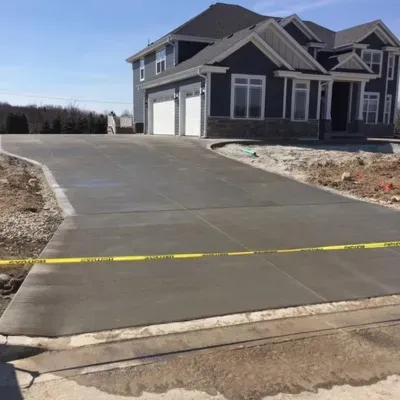
New driveway installation in Wauwatosa WI during a clear day with fresh concrete and construction barriers

Expert Installation Services in New Berlin, WI Services

At Midwest Concrete Technologies, we provide comprehensive concrete installation services tailored for driveways, patios, and walkways in New Berlin. Our team ensures proper concrete pouring, mix selection, and curing methods to deliver durable, long-lasting surfaces that withstand local weather conditions.

From new installations to repairs, we focus on structural integrity, precision, and customer satisfaction.

Concrete Driveway, Patio & Walkway Installation

We specialize in installing high-quality concrete driveways, patios, and walkways that enhance both functionality and curb appeal. Whether it's a simple driveway replacement or a decorative patio design, we deliver results that are built to last.

Reliable Concrete Repair & Maintenance Solutions

Our team handles concrete driveway repairs, old slab replacements, and offers expert tips on sealing and maintaining your concrete to prevent damage from weather and wear—protecting your investment for the long term.

Custom Concrete Solutions for Your Vision

Decorative Concrete Options

Concrete doesn’t have to be plain or purely functional. We offer decorative concrete options that add style and personality to patios, walkways, and pool decks. Options include stamped patterns, colored concrete, and textured finishes that mimic natural stone or brick.

Stained Concrete

Stained concrete uses acid staining that reacts with cement to create rich colors like natural stone. This method gives an artistic look for floors, patios, or walkways without extra materials like tiles.

Colored Concrete

Colored concrete adds pigment right into the mix before pouring so color goes through each slab. This means the color won’t fade fast from sun exposure. It’s a green choice many eco-conscious folks like because it’s environmentally friendly without losing style.

Stamped Concrete

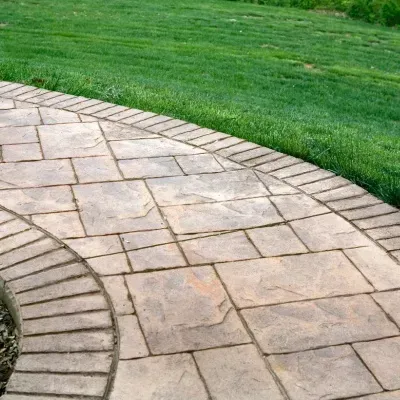
Stamped concrete copies fancy materials like brick, slate, wood grain, or cobblestone by pressing textured molds onto wet concrete before it dries. These stunning features suit driveways, patios, sidewalks, even pool decks.

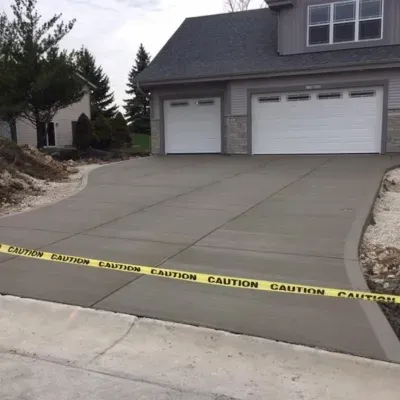
New poured concrete foundation and driveway installation in New Berlin, WI with caution tape for safety
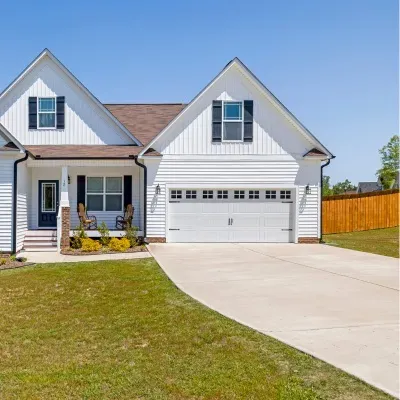
Newly constructed garage floor installation in New Berlin, Wisconsin enhancing home exterior appeal
Concrete steps and curved pathway in New Berlin, Wisconsin during sunny weather

How to Choose a Concrete Professional

Picking the right concrete contractor in New Berlin, WI matters a lot for strong and lasting results. You want to ask some good questions before hiring anyone.

  • Are you a licensed concrete contractor? 
    Licensing means they meet state rules and follow set industry standards.
  • Do you carry contractor insurance? 
    Insurance keeps you safe from problems if accidents happen during the job.
  • Are you part of any trade associations?
    Being a member of groups like local builders or national orgs shows they take their work seriously.
  • Can you share references or past jobs done around New Berlin? 
    Local experience is good because they know area rules and weather.
  • What credentials do your workers have? 
    Skilled workers usually have certificates that prove what they can do.

These questions help you find someone who’s reliable, knows the trade well, and follows all the right rules. Don’t skip them.

Experience, Reliability, and Expertise

Midwest Concrete Technologies has earned trust in New Berlin by showing expert craftsmanship backed by solid experience. Our team works carefully on every job—from driveways to stamped concrete designs—making sure results last long and look good too.

Customers often mention our great service and confident workmanship. We get plenty of positive reviews from homeowners who value the team’s skill and reliability. When you choose us, you get local concrete experts ready to change your space with strong, lasting concrete solutions that really work.

Why Choose Us?

Selecting the right contractor can make a significant difference in the outcome of your concrete project. Here’s why we are a preferred choice for many in New Berlin and surrounding areas:

Superior Workmanship

High-quality craftsmanship makes concrete last longer. Our licensed concrete contractors in New Berlin, WI follow clear workmanship standards. Our contractors pay close attention to every step. That means prepping the site right, mixing materials correctly, and finishing with care. Picking someone who follows standards means you get expert craftsmanship you can count on, whether it’s for your home or a business.

A Transparent Approach

Knowing prices helps you plan your project better. We share clear pricing with free quotes for people in New Berlin.There are no hidden fees or surprises. You get honest prices along with solid workmanship and results that last. Asking for a free estimate is easy and starts you on your path to durable concrete that fits your needs.

Reliable Concrete Services for Homes & Businesses in New Berlin, WI

Midwest Concrete Technologies is the trusted name for top-quality concrete services in New Berlin. We proudly serve homeowners and businesses with expert craftsmanship, durable materials, and a customer-first approach.

Whether it’s a new driveway, patio, foundation, or decorative concrete finish, our team ensures every project is completed with precision and long-lasting performance. Built on a reputation for reliability and attention to detail, we deliver concrete solutions that add value, strength, and style to your property.

Expert Concrete Contractors

Our skilled crew specializes in all types of concrete work, including foundation construction, flatwork, and decorative finishes—serving both home and business clients across New Berlin with dependable results.

Durable & Precise Results

Midwest Concrete Technologies is fully licensed and insured, ensuring every project meets local codes while protecting your investment with professional-grade workmanship.

Durable & Precise Results

We don’t just pour concrete—we craft strong, lasting surfaces using proven methods and premium materials that withstand Wisconsin’s weather and wear.

On-Time, Reliable Service

Our team is known for sticking to deadlines, maintaining clear communication, and delivering quality concrete work that exceeds expectations from start to finish.

Get a Free Estimate Today!

Looking for a reliable concrete contractor in New Berlin, WI? Midwest Concrete Technologies offers friendly, trusted service with years of experience. Our team is easy to talk to and gives clear info to help you plan your concrete work.

We do work that lasts long and fits what you want. Need a custom concrete design, stamped patio, colored driveway, or walkway? We handle all that with care. Being local to Waukesha County helps us know the area rules and what people need.

Call us today for a free quote. You’ll get solid workmanship and support every step of the way. We want you to feel good about your project from start to finish.

Design and pour foundation slabs in Berlin, WI

At Midwest Concrete Technologies in Berlin, we follow this clear process to design, permit, test, and pour a durable foundation slab.

Plan and design

  • You pick slab thickness based on loads and frost depth.
  • You set load requirements and drainage paths.
  • You follow ACI 332 for residential slabs and ACI 318 for structural details.
  • You add frost protection where frost reaches the slab.

Obtain permits

  • You submit plans to Berlin or Green Lake County building staff.
  • You include a site plan, footing details, and a drainage plan.
  • You check Wisconsin DSPS rules if the project needs statewide review.
  • Start permits early. Local review may take days or weeks.

Soil testing

  • You hire a geotechnical engineer to test the site.
  • You get boring logs with SPT or CPT and Atterberg limits when silts or clays appear.
  • You get a report that gives bearing capacity and frost‑susceptible soil info.

Site prep and compaction

  • Crews strip topsoil and undercut soft areas.
  • Contractors place engineered fill where needed.
  • Engineers set compaction at 95% Standard Proctor (ASTM D698).
  • A proof‑roll with a loaded roller reveals weak spots.

Install subbase and vapor barrier

  • You place compacted granular base under the slab.
  • You set an approved vapor retarder that meets ASTM E1745.
  • You tape and lap seams per the product instructions.

Set reinforcement and embedments

  • You place rebar or wire mesh per the engineer’s layout.
  • You set conduit, anchors, and embeds before the pour.
  • You use chairs to hold reinforcement at the correct cover.

Formwork and control joints

  • You set forms and slope the slab for drainage.
  • You plan saw‑cut joints to control cracking.

Pour, consolidate, and finish

  • The crew places concrete and vibrates to consolidate.
  • Finishers float and trowel to the specified surface.

Cure and protect

  • Crews maintain moisture and temperature for at least seven days.
  • Cold weather work may require heated curing and longer protection.

Final inspection and documentation

  • You schedule footing/subgrade, reinforcement, pre‑pour, and final inspections.
  • You keep geotech reports, test results, and batch tickets for records.

Start permitting early. Local review can take days to weeks.

  • Typical permits: building permit, erosion control, plumbing or electrical for embedded systems.
  • Required inspections: footing/subgrade, reinforcement placement, pre‑pour, and final slab inspection.
  • Documents to submit: engineered plans when structural work is needed, geotechnical report when requested, site plan, and contractor license info.

Soil testing & compaction

Soil tests tell you bearing capacity and frost depth. Use a licensed geotechnical engineer for accurate results.

  • Tests to order: boring log with SPT or CPT, Atterberg limits when silts or clays exist, and a percolation test if drainage is a concern.
  • Compaction targets: engineers set compaction at 95% Standard Proctor (ASTM D698) for most structural slabs.
  • Practical check: proof‑rolling with a loaded drum roller shows soft zones that need undercut and replacement.

Poor soil or low compaction causes settlement and cracking. A geotechnical report helps set slab thickness and reinforcement.

Reinforcement options (rebar, wire mesh)

Choose reinforcement by load, slab thickness, and cracking control. Follow ACI 318 and the project engineer’s design.

  • Wire mesh (welded wire fabric): you use this for thin residential slabs and for surface crack control. Common size is 6×6 W1.4/W1.4 or heavier when needed.
  • Rebar (deformed bars): you use rebar when slabs carry higher loads or need structural strength. Sizes range from #3 to #5 depending on design.
  • Hybrid approach: you place wire mesh for general crack control and rebar around heavy load areas, columns, and equipment pads.
  • Placement rules: reinforcement should sit in the slab’s upper third to mid‑depth for shrinkage control. Use chairs to hold cover.

Cite ACI 318 and the project engineer when specifying layout and lap splices.

Realistic project timeline

Timelines depend on permits, weather, and site complexity. The sequence below shows a typical schedule for a residential foundation slab.

  • Pre‑permit and design: 1–3 weeks
  • Permitting and plan review: 1–3 weeks (may overlap with design)
  • Soil testing and geotech report: 3–10 days
  • Site prep and excavation: 1–3 days
  • Subbase placement and compaction: 1–2 days
  • Vapor barrier, reinforcement, and formwork: 1–2 days
  • Pour day: 1 day
  • Initial cure and protection: 7 days for light traffic, 28 days for full strength
  • Final inspection and handover: 1–3 days after pour, depending on inspector schedule

Plan extra time for cold‑weather concreting in winter. Concrete gains strength more slowly at low temperatures and may require heated curing methods. Midwest Concrete Technologies can provide local experience, on‑site estimates, and a project schedule aligned with Berlin, WI, permitting and weather conditions.

Midwest Concrete Technologies is a local Concrete Contractor in Berlin WI. This guide compares driveways, sidewalks, and patios. It also gives simple recommendations on mixes, finishes, slope and drainage, jointing and curing.

Comparing driveways, sidewalks, and patios

Driveways

Driveways handle vehicle loads. They need thicker slabs and stronger reinforcement. A 4–6 inch slab works for most passenger cars. Heavier vehicles need 6+ inches and rebar or mesh. Good subgrade compaction extends slab life.

Sidewalks

Sidewalks carry walking loads. They use a 4 inch slab. ADA and local codes set slopes and transitions. Smooth transitions reduce tripping.

Patios

Patios carry people and furniture. They often use a 4 inch slab. Decorative finishes are common on patios. Drainage and solid subgrade stop settling and cracking.

Why the differences matter. Thickness, reinforcement, and drainage affect freeze‑thaw performance in Wisconsin winters. The Portland Cement Association has guidance on mix and air entrainment for cold climates. 

Recommended concrete mixes and slab thickness

Driveways

Use a 4,000 psi mix minimum for residential driveways. Place 5–6 inches where loads are higher. Add wire mesh or rebar for extra strength. Use 5–8% air entrainment for freeze‑thaw protection.

Sidewalks

Use 3,000–3,500 psi mixes. Make slabs 4 inches thick. Include 5–8% air entrainment.

Patios

Use 3,000–4,000 psi mixes. A 4 inch slab works for most patios. Add fiber reinforcement to limit hairline cracks.

Key notes. Use well‑graded aggregate and control water-to-cement ratio. Too much water weakens concrete. Local suppliers can adjust mixes for quick strength gain in cool weather. 

Finish options

Broom finish

Broom finish gives traction and winter safety. It works well for sidewalks and driveways.

Trowel finish

Trowel finish gives a smooth surface. Use it for indoor slabs or some patios.

Exposed aggregate

Exposed aggregate looks decorative and holds up well. It needs extra finishing steps.

Stamped or colored concrete

Stamped or colored concrete adds curb appeal and costs more. Installers need experience for good results.

Tip. For Berlin winters pick finishes that keep traction like broom or light texture. Pair with a breathable sealer to reduce deicing salt damage.

Slope & drainage best practices

General rule. Provide 1%–2% slope away from buildings (about 1/8″–1/4″ per foot). Sidewalk cross slope must not exceed 2% to meet accessibility guidance.

Avoid long steep runs that push water to one spot. Break slopes into gradual pitches. Direct runoff to swales, drain inlets, or downspout extensions so water does not pond on the slab or near foundations.

Why it matters. Proper slope prevents water infiltration, freeze damage, and premature cracking.

Jointing & curing recommendations

Joint spacing. For 4″ slabs place control joints every 8–12 feet. For thicker slabs increase spacing proportionally. A common rule is 2–3 times slab thickness in inches equals spacing in feet.

Saw-cut timing. Cut control joints between 4–18 hours after finishing depending on conditions. Early cuts reduce random cracking.

Curing. Keep concrete moist for at least 7 days. In cool weather keep it moist longer. If water curing is not practical apply a curing compound immediately. Concrete reaches full design strength over 28 days.

Best practice. Use well placed control joints, a proper mix, and steady curing to limit uncontrolled cracking. 

Final checklist before you start

  • Confirm local permits and setback rules.
  • Pick slab thickness, mix strength, and finish.
  • Plan slope and drainage away from structures.
  • Schedule the pour for favorable weather or plan cold‑weather protection.
  • Get at least three written quotes if you hire a contractor.

For local estimates, contact Midwest Concrete Technologies — your local Concrete Contractor in Berlin WI.
DIY is reasonable when you install a small patio or walkway under about 100 sq ft. You need basic tools. You must compact the subgrade and hold slope and finish control.

Hire a pro when you place driveways, especially wider than a single car or on grades. Hire pros when the site needs heavy excavation, drainage work, or retaining walls. Hire pros for stamping, coloring, or strict joint layout. Hire pros when permits or inspections apply.

Why hire a pro. Contractors bring heavy equipment for compaction and consistent mixes. Contractors add proper reinforcement and field experience to avoid costly mistakes. If you look for local installers search for Concrete Contractor in Berlin WI to find licensed crews.

Routine maintenance checklist

  • Clean annually: sweep and rinse dirt and debris.
  • Seal every 2–3 years with a breathable concrete sealer to reduce stains and salt penetration.
  • Repair small cracks under 1/4″ with concrete caulk.
  • Monitor larger cracks and call a pro for repair.
  • Avoid deicing salts during the first winter after pour; use sand for traction.
  • Check grading and gutters each year and adjust if water pools.

Simple care can add years to a slab’s life.

Typical cost per square foot (Berlin, WI area)

Estimated installed ranges for materials and labor:

  • Basic 4″ concrete slab with plain finish: $6–10 / sq ft.
  • Driveway (4–6″ with basic finish): $8–15 / sq ft.
  • Stamped or colored concrete: $12–20+ / sq ft.
  • Repairs or decorative overlays vary widely; get quotes.

Costs depend on access, site prep, removal of old concrete, thickness, reinforcement, and finish. For a reliable estimate, contact a Midwest Concrete Technologies in Berlin, WI for a site visit.

Choosing the right concrete floor affects cost, schedule, and long term performance. Midwest Concrete Technologies helps owners and contractors compare Laser‑screed commercial floors, traditional poured slabs, and exposed aggregate finishes for Berlin, WI projects.

Laser‑screed commercial floors

Installation method: Laser‑screed machines level and consolidate large slabs in one pass. The machine uses a laser guide to keep the surface flat. The process places and smooths conctrete faster and flatter than hand screeding (American Concrete Institute).

Pros and cons:

  • Pros: Laser‑screed floors give extremely flat and level surfaces for high bay warehouses and industrial facilities. The method reduces labor time on big pours. The slabs hold up well under heavy traffic.
  • Cons: Laser‑screed work costs more for equipment and setup. The crews need experience. The method does not pay off on very small jobs.

Durability & maintenance:

  • Laser‑screed slabs deliver dense, uniform concrete with fewer joints and lower curling risk. That improves durability under heavy loads (Portland Cement Association).
  • Owners should plan routine cleaning, joint inspection, and resealing where needed. These steps keep the floor performing.

Typical lead times:

  • Mobilizing laser‑screed equipment and crew adds planning and coordination time. For medium to large slabs expect 2–6 weeks from mobilization to finished floor, based on cure time and follow‑on trades.

Price range (Berlin, WI estimate):

  • $6.50–$12.00 per sq ft for industrial concrete floors. Final price depends on slab thickness, reinforcement, and jointing. Large projects usually fall toward the lower end per square foot.

Traditional poured slabs (cast‑in‑place)

Installation method: Concrete goes into formwork and contractors screed it by hand or machine. Workers finish the surface with trowels. Designers put wire mesh or rebar where the loads require it.

Pros and cons:

  • Pros: Traditional poured slabs work well for small to medium projects. The method needs less special equipment. Most contractors know how to do it.
  • Cons: Hand finishing gives lower flatness than laser screed. Surface tolerance can vary more. More joints are common.

Durability & maintenance:

  • Proper mix design, curing, and joint spacing produce durable slabs for offices, retail, and light industrial uses (PCA). Owners should plan cleaning, crack repair, and joint work. Adding surface hardeners or sealers improves abrasion resistance.

Typical lead times:

  • Small slabs can finish in days. Medium projects commonly take 1–4 weeks, including curing and joint work. Winter weather in Wisconsin can slow the schedule.

Price range (Berlin, WI estimate):

  • $4.00–$8.00 per sq ft, depending on slab thickness, reinforcement, surface finish, and site access.

Exposed aggregate finishes

Installation method: Contractors broadcast or mix aggregate into the top layer, then remove the cement paste to show the stone. The finish works on new pours or overlays.

Pros and cons:

  • Pros: Exposed aggregate gives a decorative, slip resistant surface for entrances, patios, and showrooms. The finish hides some wear and staining. Owners can choose different aggregate for looks.
  • Cons: Exposed aggregate needs more finishing labor. The finish does not suit heavy forklift traffic. Repairs or patches can stand out.

Durability & maintenance:

  • Exposed aggregate stands up to pedestrian and light vehicle use. Owners should seal the surface from time to time to preserve the look and reduce staining. Avoid harsh chemical deicers on some aggregates and cement paste.

Typical lead times:

  • Exposed aggregate adds 1–3 days to a normal pour for placement and exposure. Allow 7–28 days before heavy use for curing and sealing, based on the product.

Price range (Berlin, WI estimate):

  • $8.00–$15.00 per sq ft, based on aggregate type, exposure depth, and sealing.

If you want site-specific guidance, contact Midwest Concrete Technologies for a free assessment and a local price quote from an experienced Concrete Contractor in Berlin, WI.